What are iGrip SS shoe studs?+
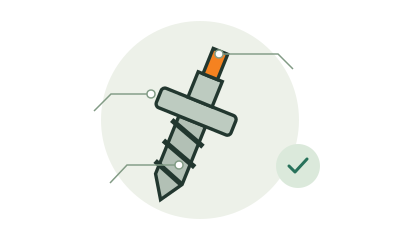
iGrip SS studs are removable screw-in traction studs for suitable shoe and boot outsoles. They combine a threaded anchor, a supporting shoulder and a carbide tip to add grip on ice and packed snow. Fit each stud into a raised tread lug, with the shoulder flush with the outsole surface. Choose the model by insertion depth and outsole thickness.
Which screw-in studs are best for my running shoes?+
The best iGrip studs for your running shoes are the models that fit the outsole thickness and raised tread lugs at every installation point. Compare insertion depth, add the recommended 2 mm outsole reserve and check that each lug supports the whole shoulder. iGrip studs are among the most popular choices for runners worldwide. Start with 12 studs per shoe, 24 per pair.
Which iGrip stud should I use for my boots?+
Start with verified, continuous outsole rubber thickness at every proposed fixing point. This guide screens the five SS models using insertion depth + 2 mm: 10 mm for SS-06; 9 mm for SS-06R and SS-08; 11 mm for SS-11 and SS-11R. Then check the model’s documented footwear application, the lug width and the current pack instructions. A thickness result alone does not certify a shoe as suitable.
What is the difference between SS-06 and SS-06R?+
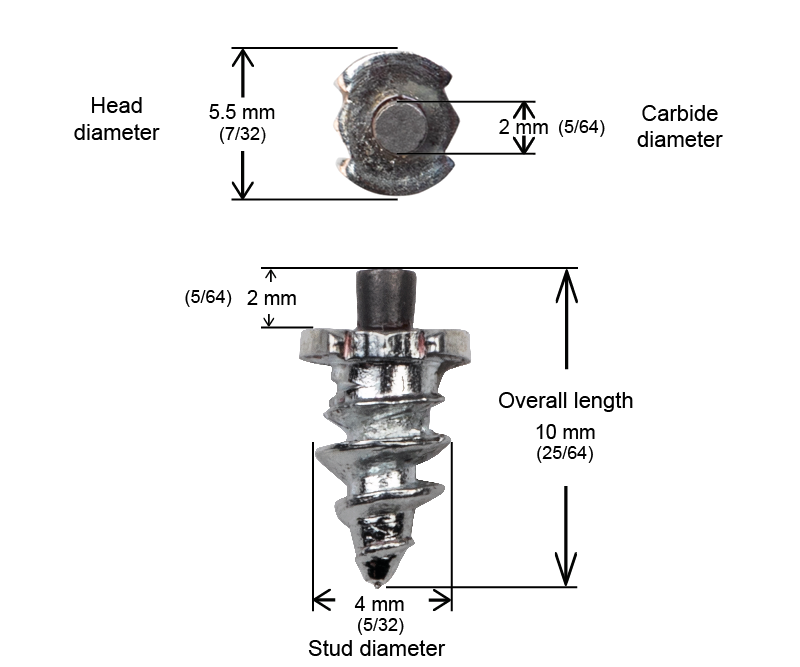
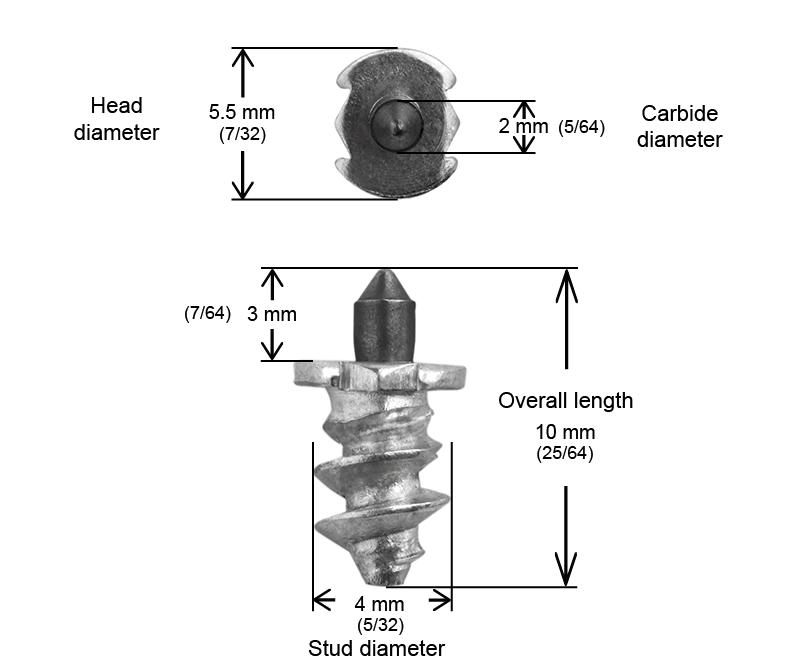
Both official drawings show 10 mm overall length, a 5.5 mm head and 2 mm carbide diameter. SS-06 has 2 mm of carbide above its metal head; SS-06R has a pointed 3 mm tungsten carbide tip. The R designation identifies the pointed carbide tip. SS-06 is listed for running/trekking shoes by the manufacturer; SS-06R is listed for safety boots by the EU store.
What is the difference between SS-11 and SS-11R?+
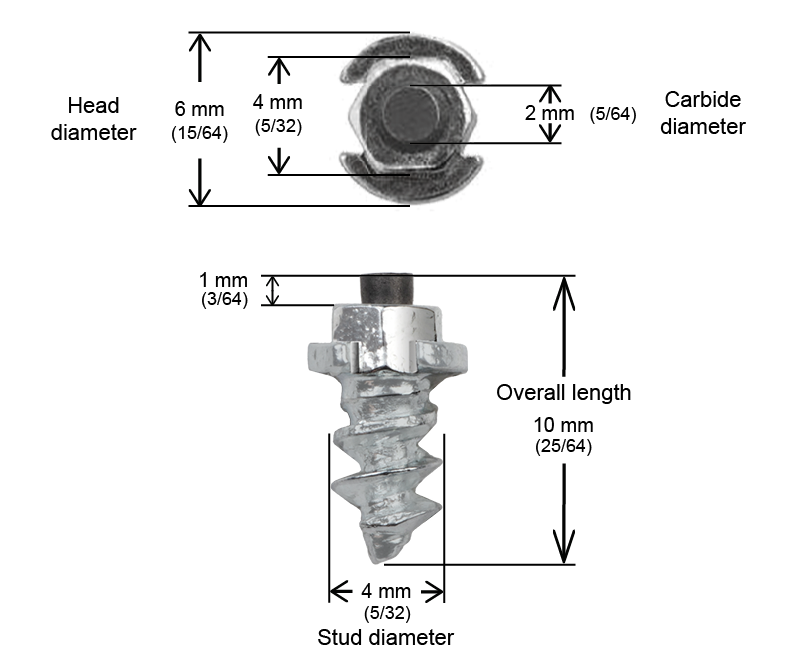
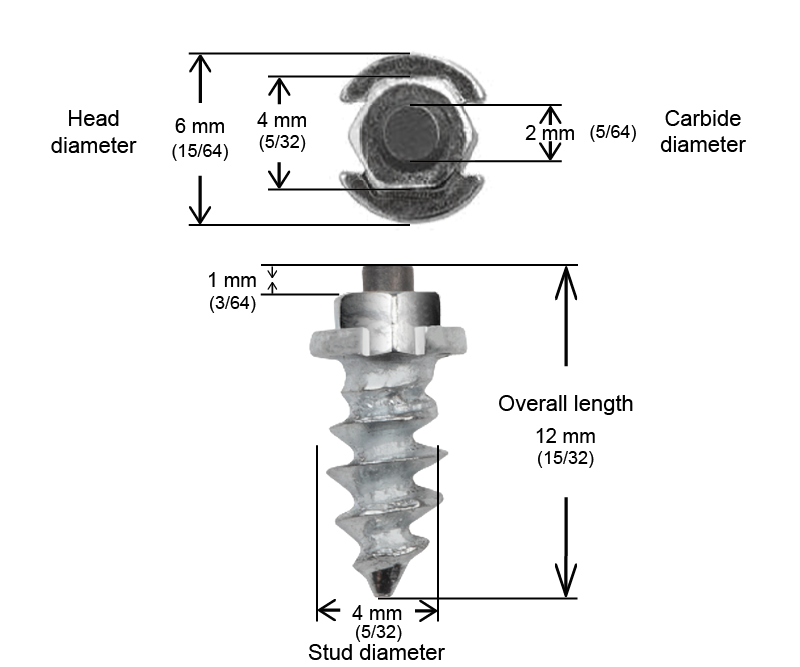
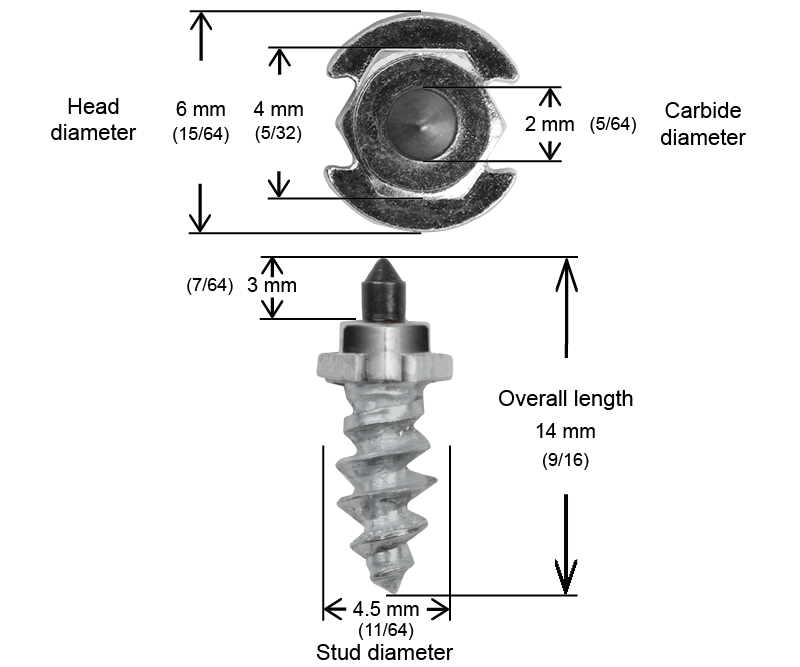
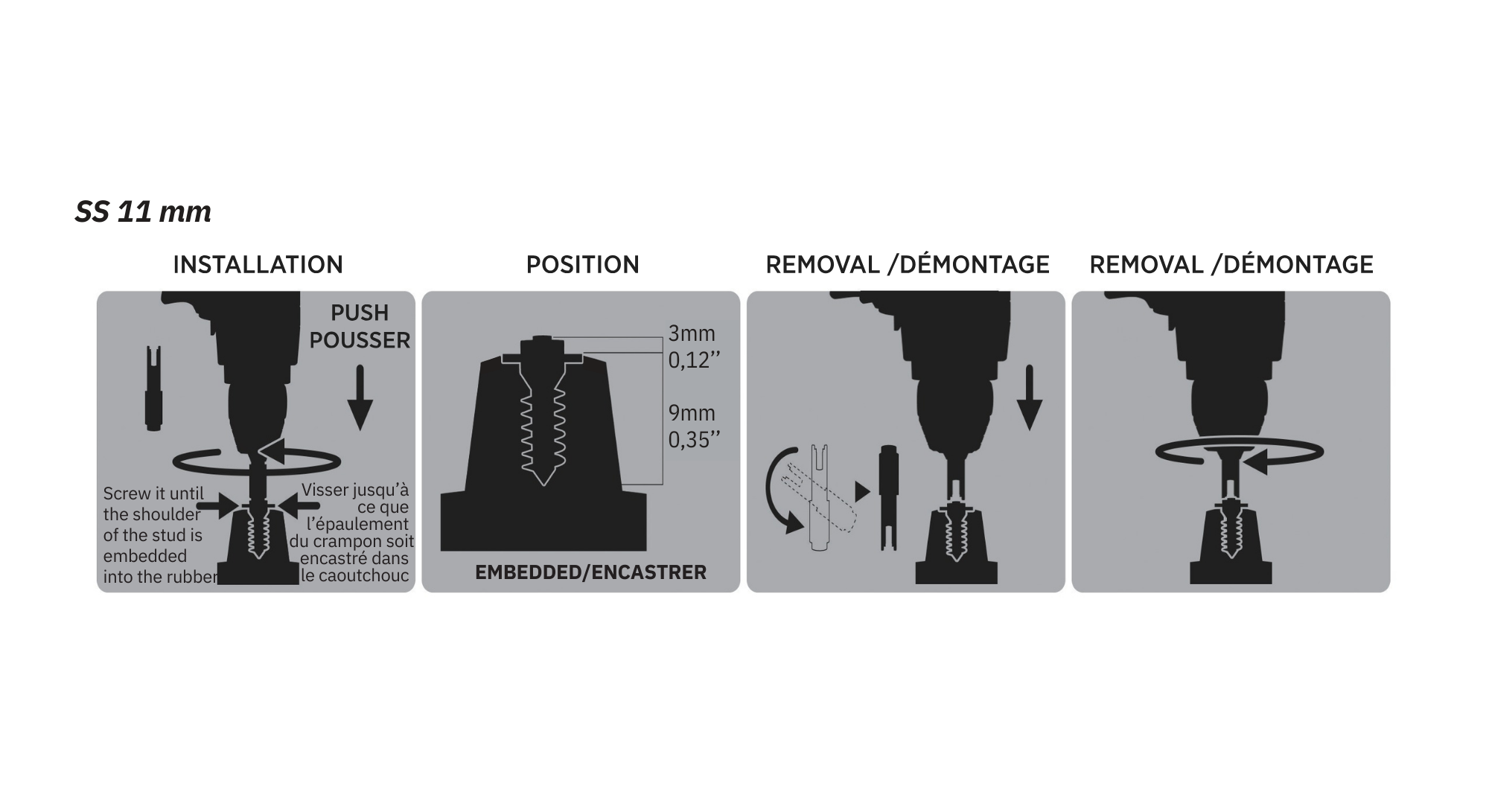
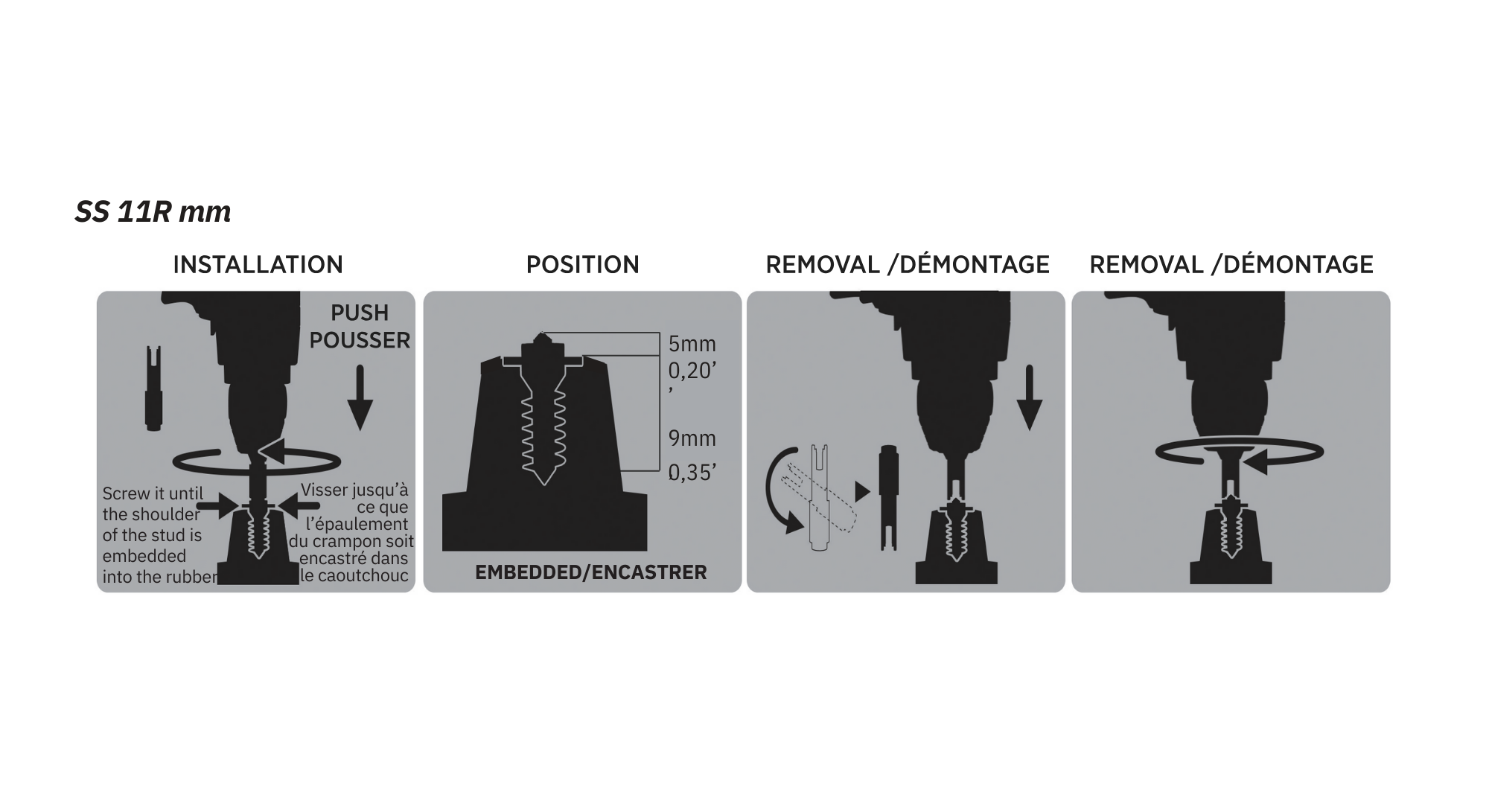
SS-11 is 12 mm overall; SS-11R is 14 mm overall. Both have a 6 mm head and 2 mm carbide diameter. The carbide rises 1 mm above the SS-11 metal head and 3 mm above the pointed SS-11R head. The stud diameters are 4 and 4.5 mm respectively. Both enter the outsole rubber by 9 mm and therefore require at least 11 mm of outsole rubber in this guide; their installed projections outside the outsole are different (3 mm and 5 mm).
How thick must my shoe sole be?+
Use the actual continuous outsole rubber thickness in the intended lug, excluding foam, cavities, insoles and internal components. The recommendation, based on practical fitting experience, is insertion depth + at least 2 mm of untouched outsole rubber. Insertion depth is overall length minus the complete installed projection outside the outsole. If thickness cannot be established reliably, ask iGrip or the footwear manufacturer before installing.
How many studs do I need per shoe?+
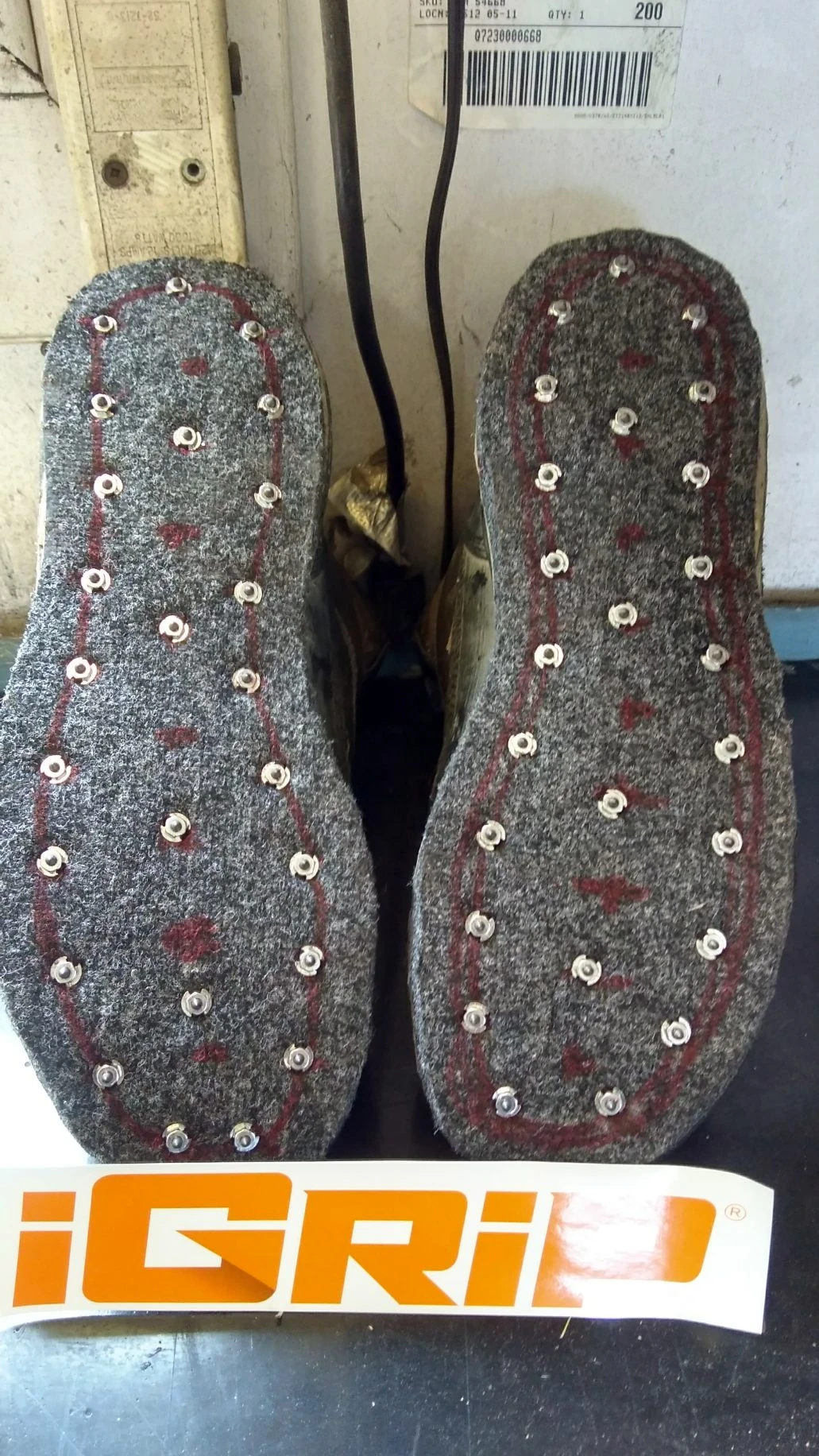
iGrip’s recommended minimum is 24 studs per pair of shoes or boots — 12 studs per shoe. This matches the 24-stud packs available for footwear. Start with the recommended 12-stud layout shown here: 6 in the forefoot and 6 in the heel of each shoe. Adapt the exact positions to the raised tread lugs on your soles and check the outsole rubber thickness at every fixing point. The 8-stud layout is below the recommended minimum; the 16-stud layout adds more contact points where suitable tread lugs allow.
Where should studs be installed?+
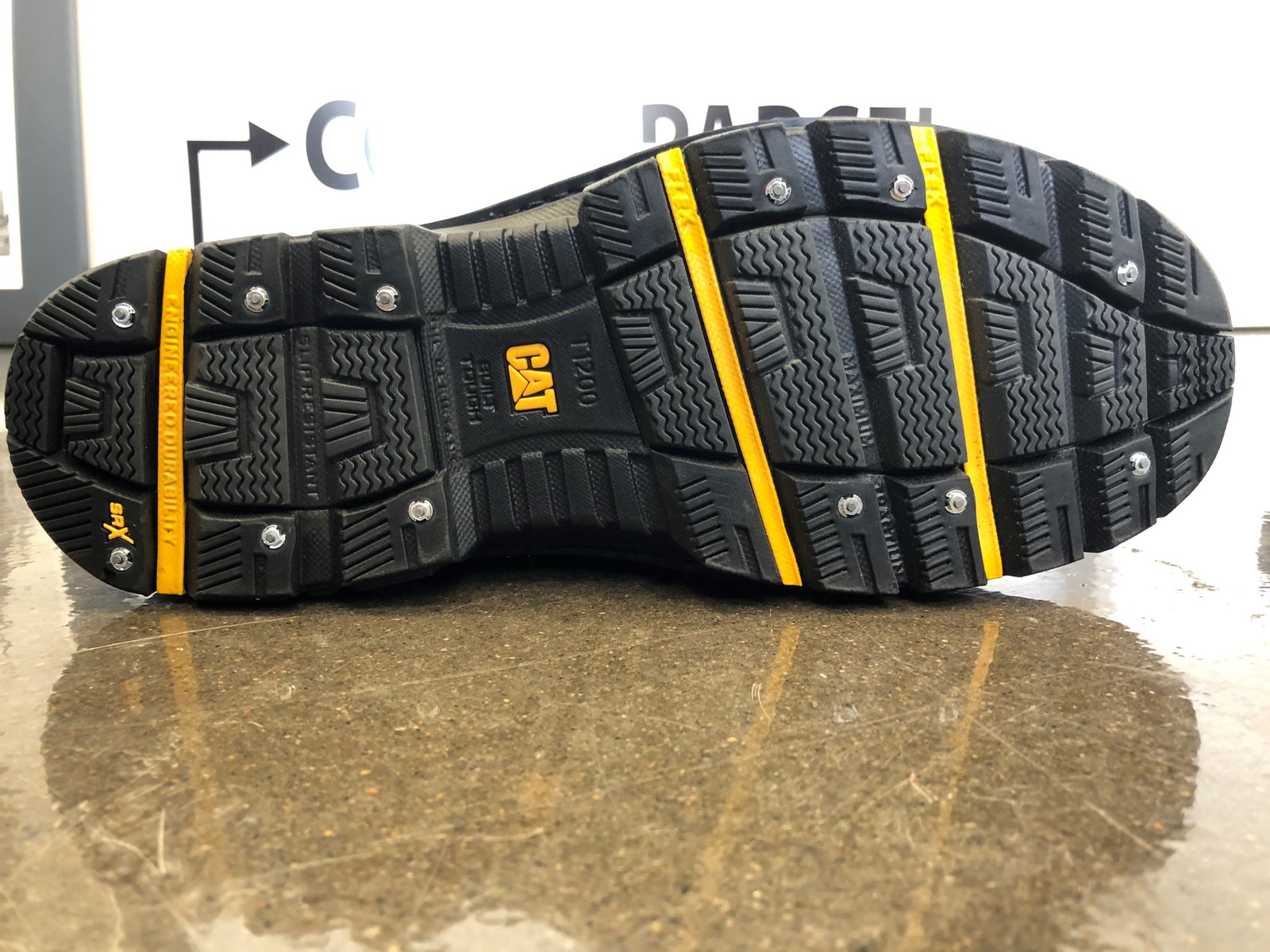
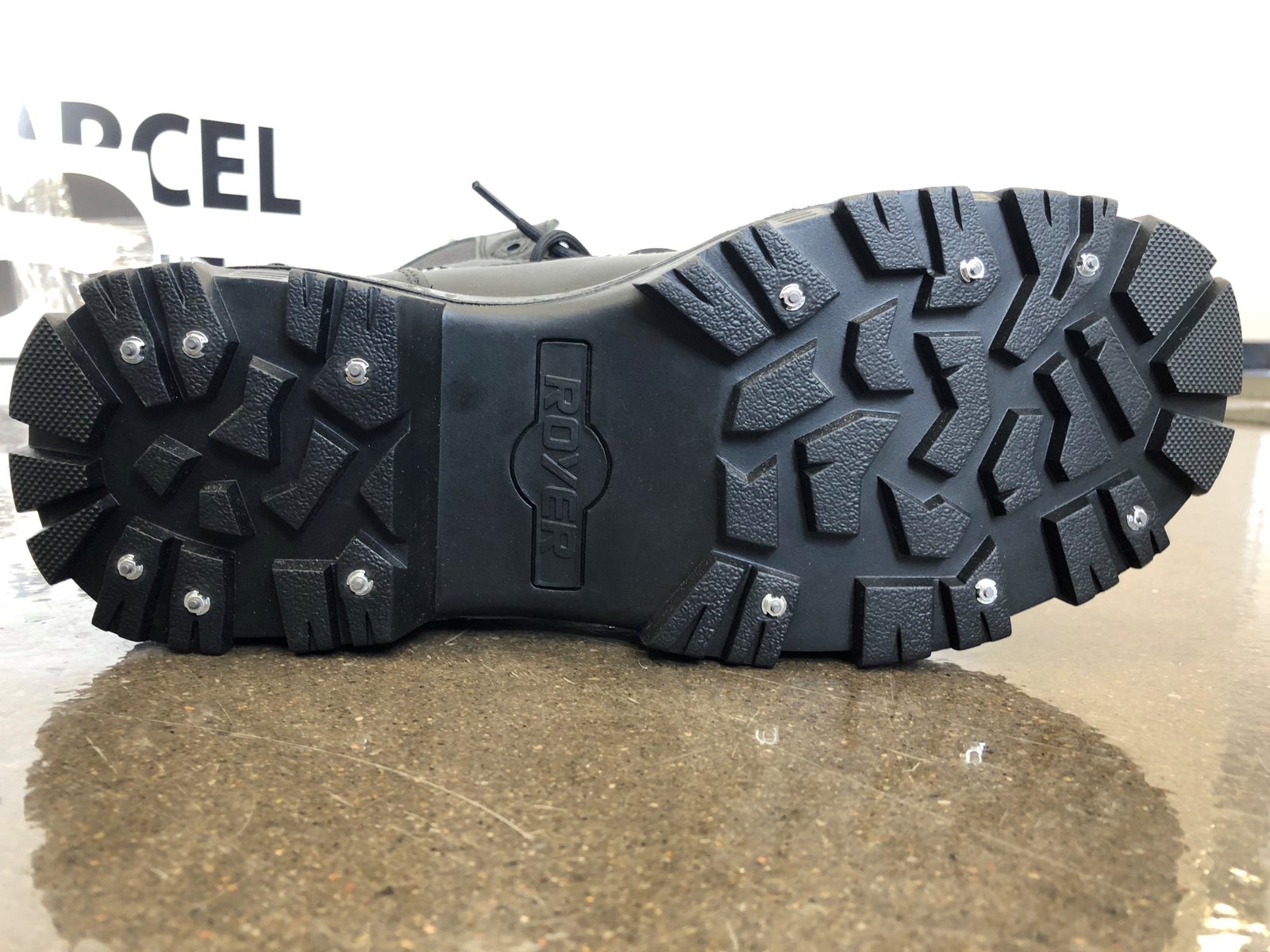
Install each stud into a raised tread lug — one of the solid outsole rubber blocks projecting from the outsole. Choose sufficiently wide, sound lugs in the heel and forefoot contact zones, with enough depth and room to support the whole shoulder. Avoid thin grooves, cracks, cavities, the unsupported edge and non-contact arch areas. Manufacturer footwear photos illustrate heel and forefoot layouts; the exact points must follow your outsole.
Should I install studs in both the heel and forefoot?+
The manufacturer’s CAT and Royer footwear examples show studs in both regions. A balanced layout avoids relying on one small contact area. Heel contact and forefoot push-off vary with gait, so the diagrams are planning aids rather than a tested braking or climbing prescription.
Can I install iGrip studs myself?+
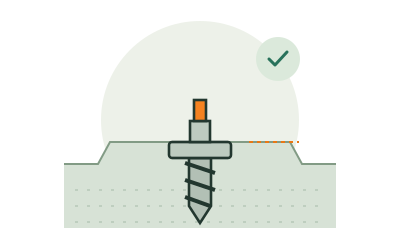
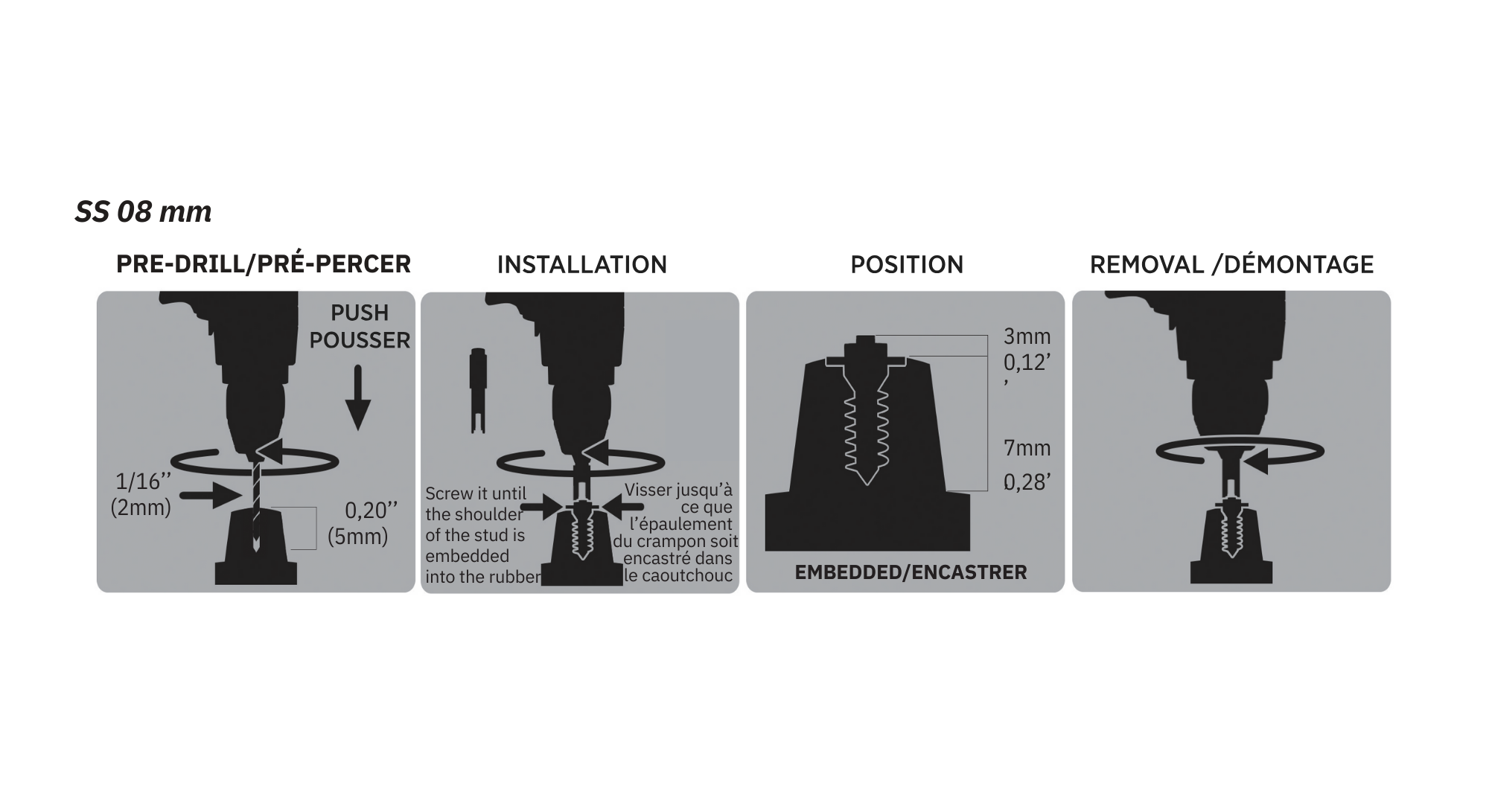
Yes, iGrip supplies an installation tool and describes fitting and removal. First verify that your outsole is suitable, follow the instructions for the exact model and maintain control of the tool. Stop if the outsole rubber tears, the stud will not hold or the shoulder is being driven below the outsole surface. Stop when its outer face is flush with the surrounding outsole surface.
Do I need to pre-drill the sole?+
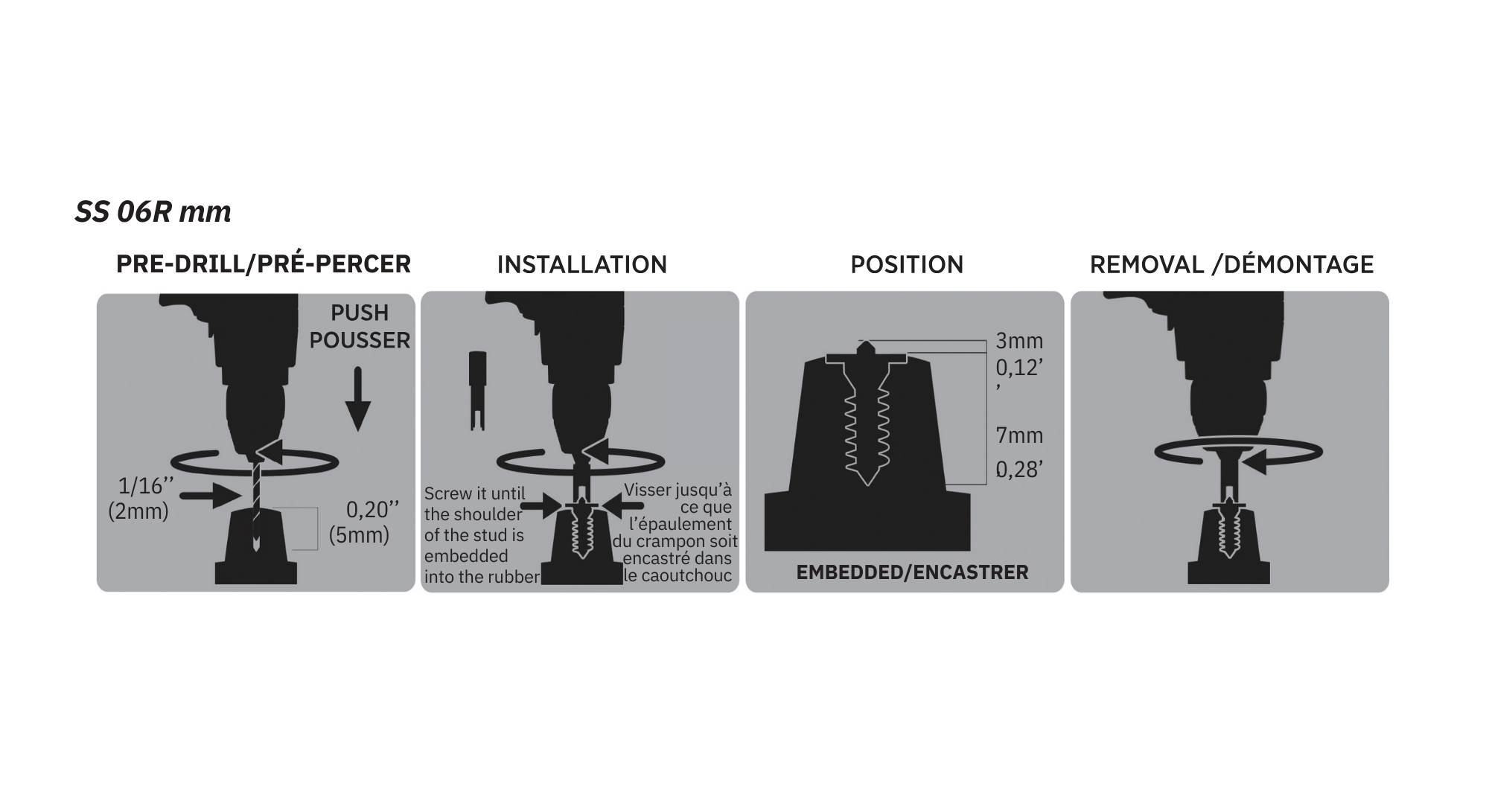
The individual SS-06, SS-06R and SS-08 diagrams show a 2 mm pilot drill to 5 mm depth. SS-11 and SS-11R diagrams do not show a pilot-drilling step. Follow your current pack’s instructions and control drilling depth. Never make a test hole to discover whether a sole is thick enough.
Can I use a cordless drill?+
The official fitting diagrams show a powered drill with the appropriate iGrip tool. Use slow, controlled rotation and a light final approach as practical fitting advice. No universal RPM or torque setting was verified. Do not treat an ordinary screwdriver tip as a substitute for the shaped iGrip bit.
Can iGrip studs be removed?+
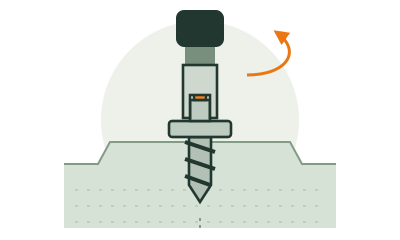
Yes. Clean the head, engage the appropriate removal end and reverse the tool. SS-11 and SS-11R diagrams show reversing the double-ended bit before removal. Unscrew counterclockwise, then inspect both the stud and the outsole rubber. An accessible shoulder/head makes tool engagement easier; damaged or buried heads may need specialist help.
Can the studs be reused?+
Yes. iGrip studs are durable and can be reused again and again. You can unscrew them from one pair of shoes or boots and install the same studs in another pair when you change your footwear. Clean and inspect the studs before refitting, replace any that are worn or damaged, and check that the new outsole has suitable tread lugs and enough outsole rubber thickness for the selected model.
Can shoe studs damage the sole?+
iGrip SS studs use a distinctive supporting shoulder to protect the outsole and keep the stud stable. When the correct model is installed in a suitable tread lug with the shoulder flush with the outsole surface, the shoulder prevents the stud from sinking deeper into the sole. Together with the threaded anchor, it limits movement and helps prevent loosening and pull-out. This is part of iGrip’s patented stud technology. Choose the right insertion depth and follow the fitting steps so the shoulder can do its job.
Are they suitable for work boots?+
Yes. For many workers, iGrip SS studs are an essential part of their winter work boots. They add traction for outdoor work on ice and packed snow, while the SS shoulder supports a stable fit in the outsole. Choose the stud model by the outsole rubber thickness at each fixing point and install it in a suitable tread lug. The recommended minimum is 24 studs per pair — 12 per boot.
Are they suitable for hiking boots?+
Yes. iGrip SS studs are especially well suited to winter hiking boots with suitable outsole tread lugs. A small investment in extra grip can make a big difference on icy trails. A fall can cost far more than a set of studs, making them a practical, thoughtful gift for family members who enjoy walking and hiking in winter. Choose the model to match the outsole thickness and follow the recommended minimum of 24 studs per pair — 12 per boot.
Are they suitable for rubber boots?+
Yes. iGrip SS studs are a popular choice for rubber boots and fishing footwear with suitable rubber outsoles. Anglers value the extra grip when stepping over slippery rocks on riverbanks and while wading over submerged stones. Wet and algae-covered surfaces can be very slippery, making SS studs a useful addition to fishing boots. Choose the model to match the outsole thickness and fit each stud into a solid tread lug.
Can I walk indoors with studs?+
Yes — indoor use depends on the floor surface. iGrip SS studs are used in warehouses and other workplaces with suitable, hard-wearing floors. Floors in homes are often more sensitive, so take extra care on wood, laminate, vinyl, tiles and polished surfaces. Metal tips can mark delicate finishes, and some smooth surfaces may be slippery. Check the grip and the floor’s suitability, follow workplace requirements, and change footwear where the surface calls for it.
Can I use different sizes in different parts of one sole?+
Measure every proposed location separately. A thinner zone must meet the threshold for its own stud; if it does not, leave it unstudded or have the layout reassessed. Do not mix models solely by length: their installed protrusion differs. Ask iGrip to confirm any mixed-model layout before fitting.
Do more studs improve grip?+
Even a few studs can provide extra grip on ice. For a regular footwear setup, follow iGrip’s recommended minimum of 24 studs per pair — 12 per shoe. You can add more studs for additional contact points, provided each one fits a solid tread lug with sufficient outsole rubber thickness and the layout stays balanced across the heel and forefoot.
Why add 2 mm to the insertion depth?+
The +2 mm allowance is a recommendation based on practical fitting experience. It leaves at least 2 mm of untouched outsole rubber beyond the inserted end of the stud. Minimum outsole thickness = insertion depth + 2 mm; the part of the stud outside the sole is excluded. For example, SS-06 enters the outsole rubber by 8 mm, so the recommended minimum outsole thickness is 10 mm. Check each fixing point and follow the instructions for your model.

 English
  Suomi
Suomi  Norsk bokmål
  Svenska
  Lietuvių kalba
  Latviešu valoda
  Polski
  Русский
  Deutsch
  Eesti
Eesti  Nederlands